
Why Are Black Men Expected to Be Strong All the Time?
Society often expects Black men to fight back. Behavioral science reveals a more complex story about stress, survival, and emotional resilience.
BEHAVIORIDENTITYFEATURED
Robert Saint Michael
7/11/20265 min read
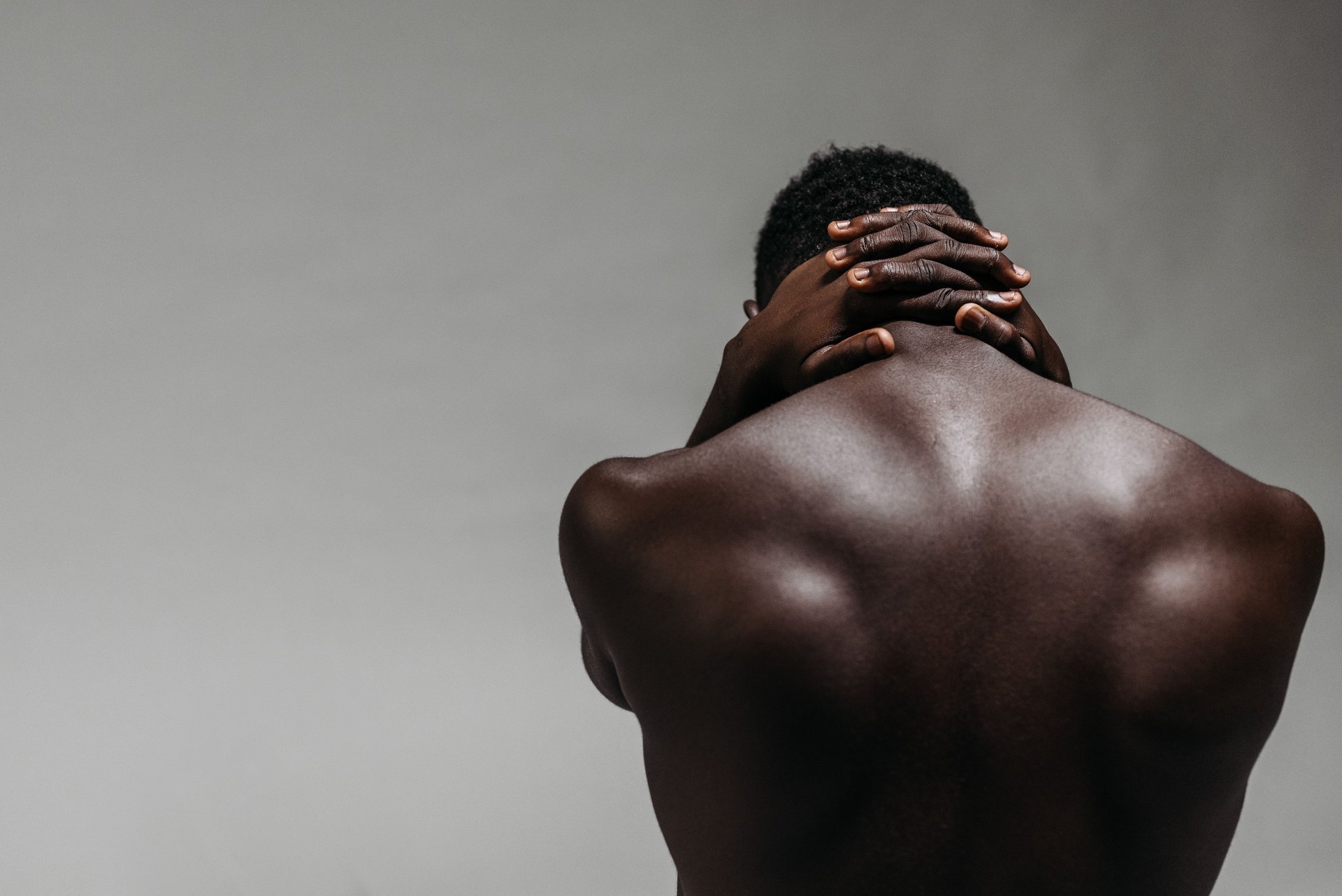
For generations, Black men have been expected to survive without breaking. Whether navigating racism, discrimination, financial pressure, family responsibilities, or the daily burden of being perceived as threatening, many grow up learning that vulnerability can carry consequences. Remaining composed, suppressing emotion, and pushing through hardship without complaint are often treated as expectations rather than choices.
These expectations shape far more than outward behavior. They influence emotional expression, relationships, and the ways people respond to stress over time. A Black man who appears emotionally guarded may not lack emotional depth. He may be relying on survival strategies that were reinforced long before he had the opportunity to question them.
The human stress response is designed to protect us from perceived danger. It responds not only to immediate physical threats but also to chronic experiences such as discrimination, uncertainty, and social pressure. Yet many Black men learn that these natural responses must be hidden rather than understood in order to appear resilient, dependable, and emotionally unshakable. Over time, that expectation can redefine what strength looks like, often at the expense of emotional well-being.
Black Men Are Often Expected to Be Strong Before They’re Allowed to Be Human.
Stress Responses Don’t Discriminate, But Society Sometimes Does.
Most people have heard of the "fight-or-flight" response, but researchers now recognize several instinctive stress responses, including freeze, fawn, fight, flight, and, in some cases, faint. These reactions occur automatically, often before we have time to consciously decide how we want to respond. According to the American Psychological Association (2023), repeated exposure to discrimination and chronic stress can produce lasting psychological and physiological effects, shaping how people perceive and respond to future situations.
For many Black men, these responses often unfold within environments influenced by racial bias, heightened scrutiny, and longstanding cultural expectations. A disagreement with a supervisor may carry different emotional weight when stereotypes influence how behavior is interpreted. An encounter with law enforcement may trigger caution instead of confrontation. Speaking honestly about anxiety or emotional distress may feel risky in communities where emotional toughness has long been associated with survival. The Centers for Disease Control and Prevention recognizes discrimination as a social determinant of health because of its measurable impact on stress, health outcomes, and overall well-being (Centers for Disease Control and Prevention [CDC], 2024).
Looking from the outside, these behaviors are easy to misunderstand.
What looks like silence may actually be self-protection.
What looks like emotional distance may be exhaustion.
What looks like compliance may be an attempt to stay safe.
These reactions are not signs of weakness. They are adaptive responses to situations the brain perceives as threatening. When people repeatedly feel they must monitor how they speak, regulate their emotions, anticipate discrimination, or suppress vulnerability, the body can spend more time in survival mode than in recovery. According to the American Heart Association (2024), chronic stress has been associated with increased risks for hypertension, cardiovascular disease, sleep disturbance, anxiety, and depression. Black Americans experience disproportionately higher rates of hypertension than many other racial and ethnic groups, with chronic stress recognized as one of several contributing factors.
Resilience deserves to be celebrated, but it should not require constant emotional sacrifice. When the expectation to remain strong leaves little room to acknowledge fear, grief, or exhaustion, resilience can become less of a choice and more of a survival strategy. Understanding that distinction is essential to redefining what strength truly means.
Lets Walk This Mile: When Strength Becomes Survival
Marcus is thirty-six years old. He rarely misses work, pays his bills on time, and is the person his family calls when something goes wrong. Friends describe him as dependable. Coworkers see him as calm under pressure. From the outside, Marcus appears to have mastered resilience.
What few people see is what happens after everyone else goes home.
He replays conversations in his head, wondering whether he said too much or not enough. He carries responsibilities quietly, convinced that asking for help would only create another burden for someone else. He has not cried in years, not because he has nothing to grieve, but because somewhere along the way he learned that vulnerability could come with consequences.
When his father died, Marcus organized the funeral before allowing himself time to process the loss. When a relationship ended, he told friends he was “fine” and went back to work the next morning. When deadlines became overwhelming, he worked longer hours instead of acknowledging that he was struggling. Each decision felt responsible in the moment. Together, they became a pattern.
To everyone around him, Marcus appears resilient. To Marcus, it often feels more like survival than strength.
The problem is not that Marcus is emotionally incapable. The problem is that he has spent decades believing emotional safety depends on appearing emotionally unaffected. What others recognize as resilience, Marcus experiences as constant vigilance.
Marcus is fictional, but the pattern is not. Many Black men learn early that appearing strong is often rewarded, while showing vulnerability can feel risky. Over time, resilience becomes less of a personal choice and more of a social expectation. Strength gradually shifts from a source of confidence to a role that must be performed.
Understanding that distinction is often the first step toward redefining what strength can actually look like.

Dear Fearfully Vulnerable Black Man,
If you’ve spent years believing that showing emotion would make you less respected, less masculine, or less safe, I hope you know those fears did not appear out of nowhere. Someone, somewhere, taught you that vulnerability was dangerous. Maybe it wasn’t through words. Maybe it was through what you watched happen to other men. Maybe it was through the expectations placed on you by your family, your community, or simply the world around you. However you learned it, those lessons were real, and they shaped the way you learned to survive.
If you’ve become the person who carries everything quietly, who tells everyone you’re fine when you aren’t, or who believes your value comes from always being the strong one, you are not alone. Many Black men have learned to protect themselves in exactly the same way. What begins as self-protection can quietly become identity, until strength no longer feels like a choice but an obligation that follows you into every room you enter.
I don’t believe your strength comes from pretending nothing hurts. I believe it is found in everything you’ve endured while continuing to love, to care, and to show up for the people who matter to you. The fact that you are still here, still trying, and still carrying hope despite everything you’ve experienced says far more about your character than silence ever could.
I also believe you deserve more than survival. You deserve relationships where honesty is not mistaken for weakness, spaces where you do not have to perform strength every moment of the day, and the freedom to be fully human without feeling as though you must first earn that right. Vulnerability will not erase your strength. If anything, it reminds you that your humanity has always been there beneath the armor.
My hope for you is simple. I hope that one day strength no longer feels like something you have to prove. I hope it becomes something you simply know. Until then, keep walking your Mile.
References:
American Heart Association. (2024). How chronic stress affects your heart. https://www.heart.org/
American Psychological Association. (2023). Stress effects on the body. https://www.apa.org/topics/stress/body
American Psychological Association. (2023). Racism, bias, and discrimination. https://www.apa.org/topics/racism-bias-discrimination
Centers for Disease Control and Prevention. (2024). Social determinants of health at CDC: Racism and health. https://www.cdc.gov/about/priorities/why-is-addressing-sdoh-important.html
McEwen, B. S. (2007). Physiology and neurobiology of stress and adaptation: Central role of the brain. Physiological Reviews, 87(3), 873–904. https://doi.org/10.1152/physrev.00041.2006
Sapolsky, R. M. (2004). Why zebras don’t get ulcers (3rd ed.). Henry Holt and Company.
About the Author
Robert Saint Michael is a Behavioral Health Strategist and founder of The Human Mile, an editorial platform dedicated to exploring behavior, identity, relationships, and community through evidence-informed, human-centered analysis. Drawing on nearly two decades of experience across behavioral health, crisis intervention, psychiatric care, and community-based services, his work bridges behavioral science with the lived experiences that shape people’s lives.
The Human Mile.
© 2026 | Robert Saint Michel
All Rights Reserved

